
Doctors recommend chess for kids because it helps develop focus, patience, and strong thinking skills at an early age. When doctors talk about a child’s development, they don’t just focus on height, weight, or eyesight anymore. Today, pediatricians and child psychologists are paying close attention to focus, emotional control, memory, and decision-making skills—and surprisingly, one simple activity keeps coming up in these conversations: chess.
What Doctors See in Chess That Most Parents Don’t

Doctors don’t look at chess as just a game or a hobby. They see it as a powerful mental exercise that trains a child’s brain to focus longer, think before acting, and manage emotions under pressure. While many parents notice only the board and pieces, doctors notice improvements in attention span, patience, memory, and decision-making skills—all of which are critical for a child’s overall development.
Doctors don’t see chess as a game — they see it as brain training for life.
This is why chess is increasingly viewed by medical and child-development experts as a simple yet effective tool for building strong thinking habits early in life.
| What Parents Notice | What Doctors See | Why It Matters |
|---|---|---|
| A board game | Brain training | Builds thinking skills naturally |
| Winning or losing | Emotional control | Teaches calm handling of success & failure |
| Quiet sitting | Deep focus | Improves attention span |
| Slow gameplay | Impulse control | Helps kids think before acting |
| Remembering moves | Memory & patterns | Supports learning and problem-solving |
| Turn-based play | Discipline | Builds patience and self-control |
| Competition | Stress management | Helps children stay calm under pressure |
| Screen-free activity | Healthy brain habits | Reduces screen dependency |
When doctors recommend chess, they aren’t thinking about trophies or rankings. They’re thinking about focus, emotional balance, and strong thinking habits that help children succeed both inside and outside the classroom. What looks like a simple game to most parents is, in reality, a powerful tool that quietly shapes how a child thinks, reacts, and grows.
If chess can support your child’s brain development, the way it’s taught matters just as much as playing it. Structured guidance, age-appropriate learning, and a positive environment help children experience these benefits fully.
At Arena of Chess, we focus on helping kids learn chess in a fun, structured, and pressure-free way, so they don’t just play better—they think better. Recognized by many parents as one of the best chess academies for kids in Jaipur, Arena of Chess focuses on structured, age-appropriate learning that builds both confidence and thinking skills. Our programs are designed to support children at every stage, whether they are just starting or looking to grow steadily.
How Chess Supports a Child’s Brain Development (According to Doctors)
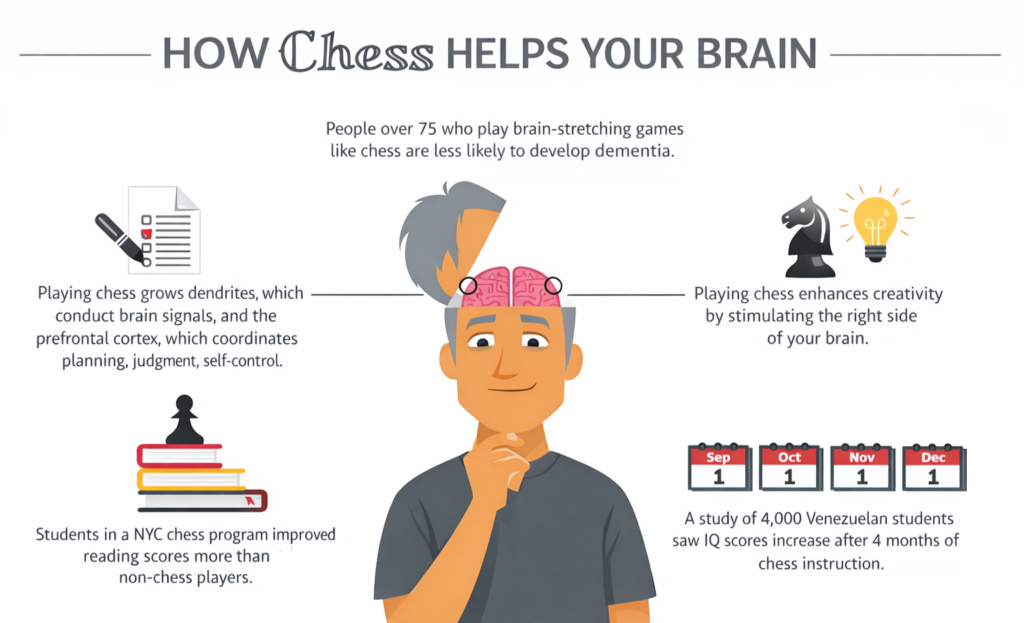
When doctors and child-development experts talk about brain growth, they focus on activities that strengthen attention, memory, emotional control, and decision-making. Chess stands out because it engages all these areas at the same time. Medical professionals view chess as a form of mental exercise that helps children practice planning, problem-solving, and self-control in a calm, structured way.
This is why many parents exploring the benefits of chess for kids are now choosing structured learning through platforms like Arena of Chess, where children learn chess in a way that supports both brain development and healthy thinking habits. Over time, this kind of learning helps children perform better not just in school, but in real-life situations as well.
How Chess Helps a Child’s Brain Grow
- Improves Focus and Attention Span
Doctors observe that chess trains children to sit calmly, concentrate longer, and stay mentally engaged—skills that directly help in classrooms and daily tasks. - Strengthens Memory and Pattern Recognition
Remembering moves, positions, and strategies activates memory centers in the brain, supporting better learning and recall. - Develops Decision-Making Skills
Every move in chess teaches children to think ahead, evaluate consequences, and make thoughtful choices instead of acting impulsively. - Builds Emotional Control and Patience
Doctors value chess for teaching children how to manage frustration, handle mistakes, and stay composed under pressure. - Encourages Problem-Solving and Logical Thinking
Chess challenges the brain to analyze situations, find solutions, and adapt—important skills for academics and real life. - Supports Healthy Brain Habits Without Screens
As a screen-free activity, chess helps reduce overstimulation while still keeping the brain active and engaged.
Doctors see chess as a simple, effective way to train the brain skills children need for school and life.
| Brain Skill | How Chess Helps |
|---|---|
| Focus | Trains children to concentrate for longer periods |
| Memory | Strengthens recall and pattern recognition |
| Decision-Making | Teaches thinking ahead before acting |
| Emotional Control | Helps manage stress, mistakes, and patience |
| Problem-Solving | Encourages logical and strategic thinking |
Chess doesn’t just entertain children—it quietly strengthens the brain skills doctors consider essential for healthy growth, learning, and emotional balance.
Why Doctors Recommend Chess for Kids Today
Doctors are noticing a major shift in children’s behavior over the last few years—shorter attention spans, increased screen dependence, impulsive decision-making, and difficulty managing emotions. While apps and fast-paced games overstimulate the brain, medical and child-development experts are now favoring activities that slow children down and train the mind in a healthy way. Chess fits this need perfectly.
Unlike screen-based games, chess requires children to pause, think, plan, and accept consequences. Doctors value this because it strengthens areas of the brain responsible for focus, self-control, and emotional regulation. For many parents searching for healthy alternatives to screen time, chess has become a trusted, doctor-approved option that supports both mental growth and emotional balance.
What’s Changed in Children Today (Doctor Observations)
- Reduced attention span due to constant digital stimulation
- Difficulty handling frustration and losing
- Impulsive reactions instead of thoughtful decisions
- Overexposure to screens affecting sleep and focus
Doctors recommend chess because it directly works against these issues in a calm, structured, and engaging way.
Why Chess Stands Out (According to Doctors)
| Modern Problem in Kids | How Chess Helps |
|---|---|
| Short attention span | Trains sustained focus |
| Screen addiction | Provides a screen-free mental challenge |
| Emotional outbursts | Builds patience and emotional control |
| Impulsive behavior | Encourages thinking before acting |
| Academic pressure | Improves problem-solving and reasoning |
Doctors recommend chess today because children need thinking skills—not more screen time.
In today’s fast-paced, screen-heavy world, doctors see chess as a simple yet powerful way to help children slow down, think clearly, and develop strong mental habits that last a lifetime.
At What Age Do Doctors Recommend Starting Chess for Kids?
Why this is the best next move
Doctors agree that chess can be introduced earlier than most parents expect, as long as it’s taught in an age-appropriate and enjoyable way. Instead of focusing on competition or memorization, medical and child-development experts recommend starting chess as a thinking activity, not a pressure-filled game.
The goal at a young age is not to create champions—but to help children develop focus, patience, and problem-solving skills at a pace that suits their brain development.
Doctor-Recommended Age Guide for Chess
| Child’s Age | Doctor Recommendation | What Kids Learn |
|---|---|---|
| 4–5 years | Introduce basics through play | Focus, patience, following rules |
| 6–7 years | Start structured learning | Thinking ahead, simple planning |
| 8–10 years | Regular guided practice | Problem-solving, emotional control |
| 11+ years | Strategy & competition | Decision-making, confidence |
Doctors don’t recommend waiting for the “perfect age” — they recommend starting chess when learning feels fun, not forced.
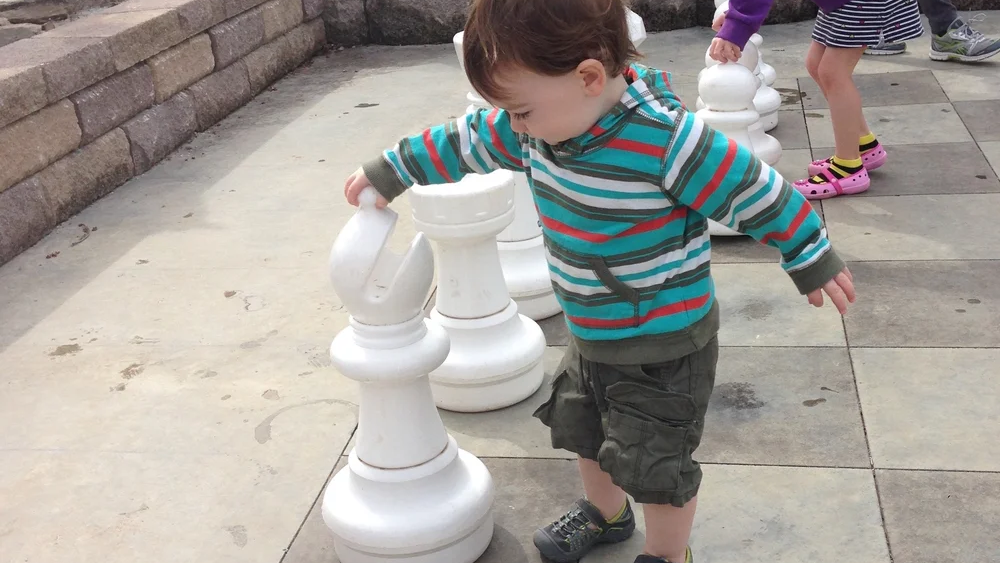
From a doctor’s point of view, the right age to start chess isn’t about creating prodigies or future champions. It’s about giving children a calm space where they can learn to think, make mistakes, and try again without pressure. Chess allows children to slow down in a fast world, practice patience in small moments, and develop confidence in their own decisions.
When chess is introduced at the right time and taught the right way, it becomes more than a game. It becomes a habit of thoughtful thinking — something doctors believe children carry with them into school, relationships, and everyday life.
Online vs Offline Chess Classes: What Do Experts Recommend?
Parents often assume that offline classes are always better, simply because they feel more traditional. Doctors and child-development experts, however, look at this question differently. Instead of asking where a child learns chess, they focus on how the learning environment affects focus, comfort, and consistency.
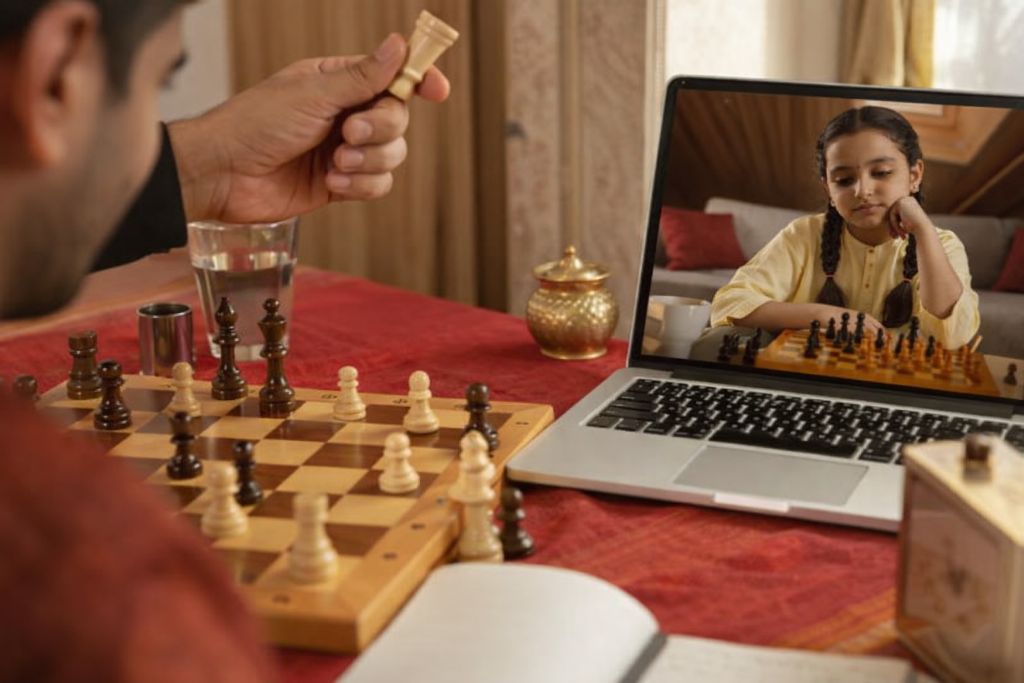
For some children, offline chess classes work well because they enjoy physical interaction and group settings. For others, especially younger kids or those who get distracted easily, online chess lessons can actually be more effective. Doctors point out that when children feel comfortable and relaxed, their brain absorbs information more easily—whether the lesson happens at a chess academy or at home.
What Doctors Consider More Important Than Location
From a medical and developmental perspective, the learning setup matters more than the format. Doctors usually look for these key factors:
- Short, focused sessions instead of long tiring classes
- Clear guidance from a coach, not random self-learning
- A pressure-free environment where mistakes are normal
- Consistency, even if it’s just a few sessions per week
If these elements are present, both online and offline chess can support healthy brain development.
Doctors don’t believe there is one “perfect” format that works for every child. What they consistently emphasize is balance. A learning environment that feels safe, enjoyable, and structured helps children stay engaged without feeling overwhelmed. When chess is taught in a way that fits a child’s routine and personality, the benefits go far beyond the game itself.
Whether lessons happen online or offline, what truly matters is that chess remains a positive experience—one that encourages thinking, patience, and confidence rather than pressure. When children enjoy the process, doctors say the brain responds naturally, and learning becomes effortless.
Final Thoughts: Why Doctors Believe Chess Matters for Kids
Doctors don’t recommend chess because it creates champions or boosts trophies. They recommend it because they see what children struggle with today—short attention spans, emotional overload, and constant digital distractions. Chess offers something rare in a child’s routine: a quiet space to think, pause, and make decisions without pressure.
From improving focus and patience to helping children handle mistakes calmly, chess supports the kind of brain development doctors value most. It encourages children to slow down, think ahead, and trust their own decisions—skills that matter far beyond the chessboard. When taught in the right way, chess becomes less about winning and more about growing.
For parents, the takeaway is simple. Chess doesn’t need to be intense, competitive, or overwhelming to be beneficial. Introduced gently and practiced consistently, it can become a positive habit that supports learning, confidence, and emotional balance throughout childhood.