
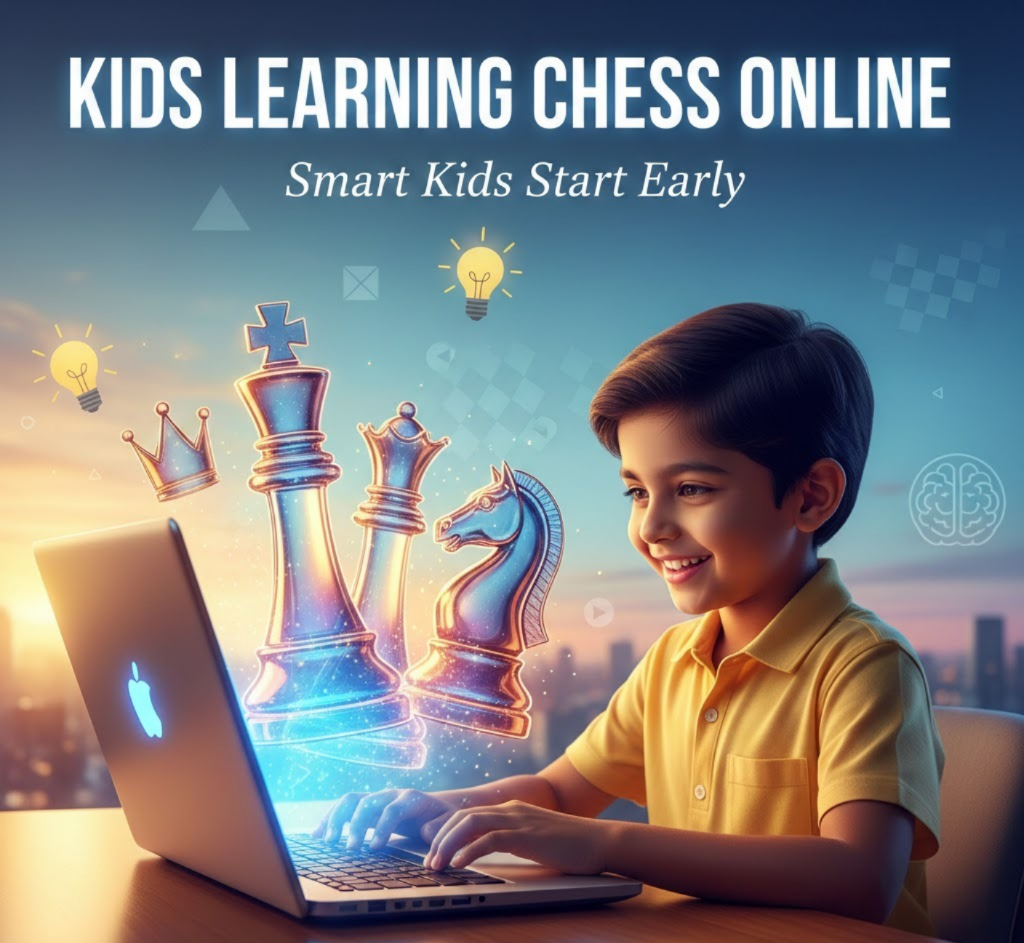
Chess is no longer just a board game played on Sunday afternoons. Today, children across the world are learning chess online, improving their thinking skills, and gaining confidence — all from home.
Parents often ask:
- Is online chess good for kids?
- At what age should a child start chess?
- How can my child learn chess online properly?
- Will chess help in studies and focus?
Why Chess Is One of the Best Games for Kids
Chess is not just about winning or losing. It is a thinking sport that builds life skills.
Benefits of Chess for Children
- Improves concentration and focus
- Builds problem-solving ability
- Teaches patience and discipline
- Improves memory and planning
- Develops decision-making skills
- Helps control emotions
Many parents notice that kids who play chess:
- Sit longer with homework
- Think before answering
- Become calmer and more confident
Why Online Chess Learning Is Better Than Ever
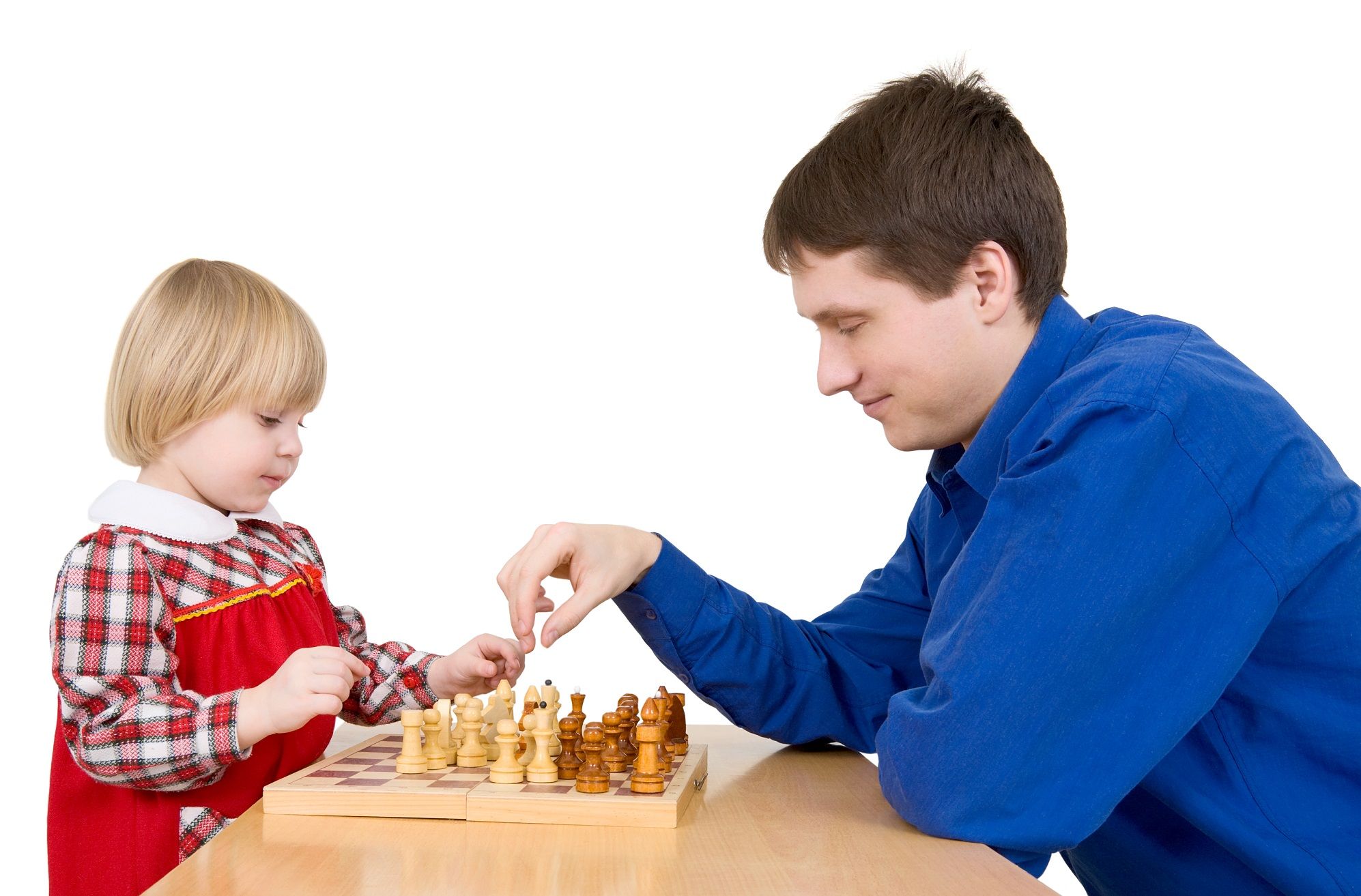
Earlier, children had to go to chess clubs or schools. Today, online chess learning has made quality coaching available everywhere.
Advantages of Learning Chess Online
- Learn from home (safe and comfortable)
- Access to top coaches from any city
- Flexible class timings
- Recorded lessons for revision
- Regular online tournaments
- One-to-one attention possible
Online chess saves time, travel, and energy — especially for school-going children.
What Is the Right Age to Start Chess?
One of the most common questions parents ask.
Ideal Age to Start Chess
- 4–5 years: Learn board, pieces, and fun basics
- 6–8 years: Learn rules, tactics, and simple strategies
- 9–12 years: Serious improvement and tournaments
- 13+ years: Competitive and advanced training
Children as young as 4 years old can start if teaching is playful and simple.
How Kids Learn Chess Online (Step-by-Step)

Online chess learning follows a clear progression. A good program never rushes the child.
Step 1: Understanding the Chess Board
Kids first learn:
- 64 squares
- White and black colors
- Rows and columns
- How to set up the board
This builds comfort and familiarity.
Step 2: Learning Chess Pieces
Each piece is taught separately:
- Pawn
- Rook
- Knight
- Bishop
- Queen
- King
Children enjoy learning how each piece moves and captures.
Step 3: Rules and Special Moves
Kids slowly learn:
- Check and checkmate
- Castling
- En passant
- Pawn promotion
- Draw rules
Rules are taught with examples, not theory.
Step 4: Simple Checkmates
Children practice basic checkmates like:
- King and queen vs king
- King and rook vs king
This builds confidence early.
Step 5: Tactics and Thinking

Kids learn simple tactics:
- Fork
- Pin
- Skewer
- Discovered attack
Tactics improve calculation and alertness.
Step 6: Openings, Middlegame, Endgame
Children are introduced to:
- Opening principles (not memorization)
- Piece activity
- King safety
- Basic endgame ideas
Teaching focuses on ideas, not rote learning.
Group Classes vs One-to-One Classes
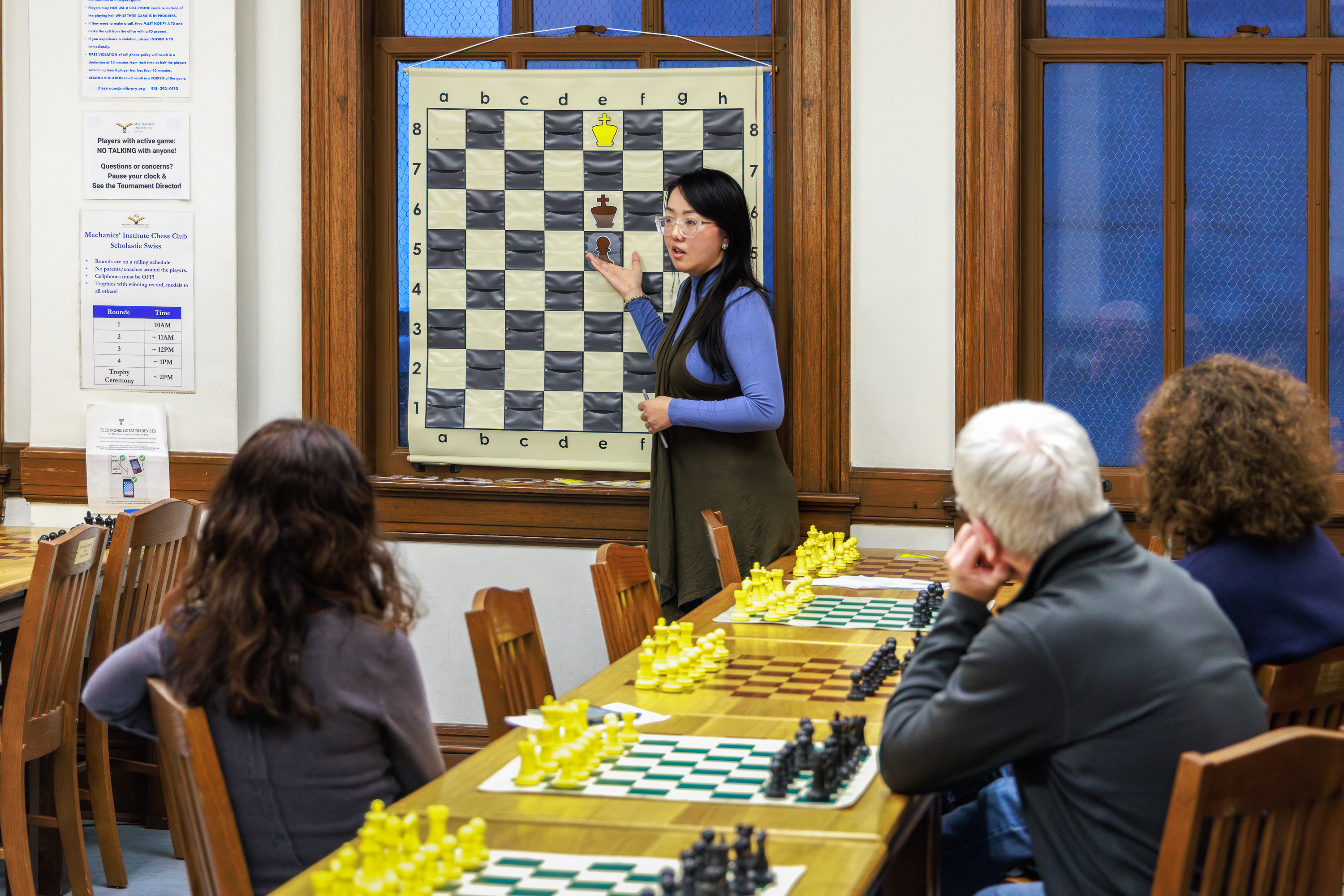
Group Classes
Pros
- More interactive
- Kids enjoy peer learning
- Affordable
Cons
- Less individual attention
One-to-One Classes
Pros
- Personal attention
- Faster improvement
- Customized learning
Cons
- Higher cost
👉 Best approach: Start with group classes, shift to one-to-one later.
How Often Should Kids Practice Chess?
Consistency matters more than long hours.
Recommended Practice Time
- Age 5–7: 15–25 minutes daily
- Age 8–10: 30–45 minutes daily
- Age 11–14: 1–2 hours daily
Short, regular practice works better than long sessions once a week.
Online Tournaments: Are They Safe for Kids?
Yes, if guided properly.
Benefits of Online Tournaments
- Builds confidence
- Teaches sportsmanship
- Improves time management
- Reduces fear of losing
Parents should:
- Monitor screen time
- Encourage learning, not pressure
- Focus on effort, not result
Common Mistakes Parents Make (And How to Avoid Them)
Mistake 1: Forcing the Child
Chess should be enjoyed, not forced.
Mistake 2: Expecting Fast Results
Chess improvement takes time.
Mistake 3: Too Many Classes
Quality > Quantity.
Mistake 4: Ignoring Fun
Fun keeps children motivated.
How Chess Helps in School Studies
Many parents see improvements in:
- Mathematics
- Logical reasoning
- Concentration
- Exam calmness
Chess trains the brain to think before acting, a skill useful everywhere.
Screen Time: Is Online Chess Safe?
Chess screen time is active thinking, not passive watching.
Tips:
- Balance with physical activity
- Avoid late-night games
- Use fixed chess hours
Chess is one of the healthiest screen activities for kids.
How to Choose the Right Online Chess Program
Before enrolling, check:
- Coach experience
- Child-friendly teaching
- Structured curriculum
- Class size
- Feedback system
- Trial class availability
A good coach matters more than a famous name.
Can Chess Become a Career for Kids?
Yes, chess offers multiple paths:
- Tournament player
- Coach or trainer
- Arbiter
- Content creator
- Analyst
- Academy owner
But even if chess is not a career, the skills gained last a lifetime.
Frequently Asked Questions
Is online chess good for kids?
Yes, online chess improves thinking, focus, and confidence.
At what age should a child start chess?
Children can start from age 4–5.
How long does it take to get good at chess?
With regular practice, visible improvement happens in 3–6 months.
Do kids need to play tournaments?
Not mandatory, but helpful for growth.
Final Thoughts for Parents
Chess is one of the best gifts you can give your child. Online chess learning makes it easier, safer, and more effective than ever before.
The goal is not to create a champion overnight, but to help your child:
- Think clearly
- Stay calm under pressure
- Enjoy learning
- Build confidence
If chess brings these qualities, it is already a success ♟️