
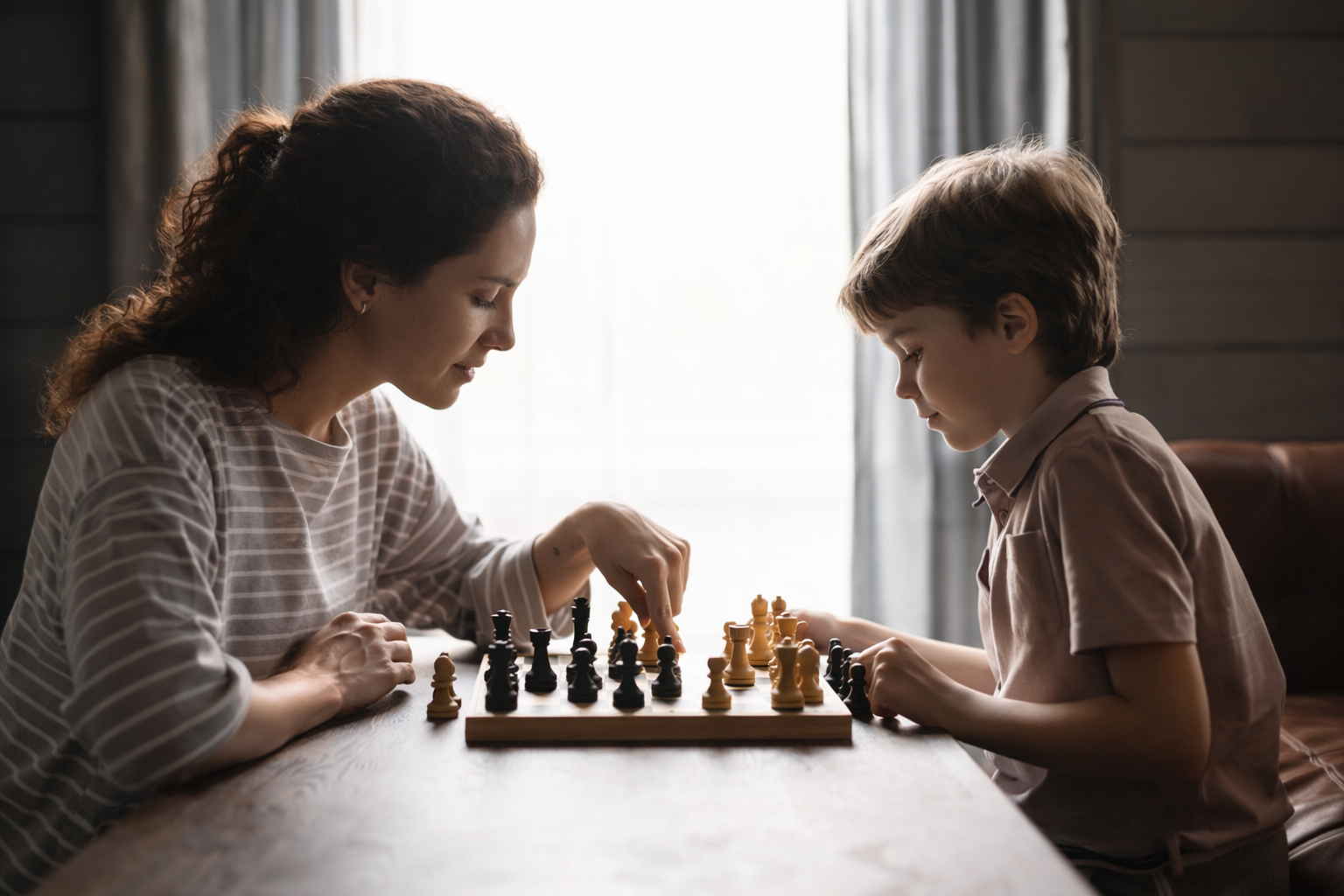
I Let My Child Play Chess for 30 Days And The Results Shocked Me
Why I Decided to Try This Experiment
It started with a simple concern — I noticed my child’s attention span shrinking. Screens were becoming more exciting than books. Quick entertainment was replacing deep thinking.
One evening, while cleaning the shelf, I found an old chessboard I hadn’t touched in years. On impulse, I asked, “Do you want to try this?”
That one question turned into a 30-day experiment I never planned… but desperately needed.
The First 7 Days: Frustration Before Focus
The first few days were not magical.
There were sighs. There were complaints. There were moments when my child wanted to quit after losing a single piece.
But something interesting started happening around day four.
Instead of asking, “Can I stop?”
I began hearing, “Wait… let me think.”
That pause — that tiny moment of concentration — was the first sign that something was changing.
Week Two: Something Subtle Changed
By the second week, I stopped reminding my child to play.
The chessboard was already set before I even mentioned it.
There were still losses — plenty of them — but the reactions were different. Instead of frustration, there was curiosity. Instead of giving up, there were questions.
“Why did that move work?”
“Is there a better way to protect my queen?”
And what surprised me most wasn’t just the game itself.
It was the patience.
Homework was getting finished without constant reminders. Small problems weren’t turning into big emotional storms anymore. I started noticing longer attention spans — not just on the board, but in everyday life.
That’s when I realized this wasn’t about chess anymore.
It was about thinking.
Week Three: Confidence I Didn’t Expect
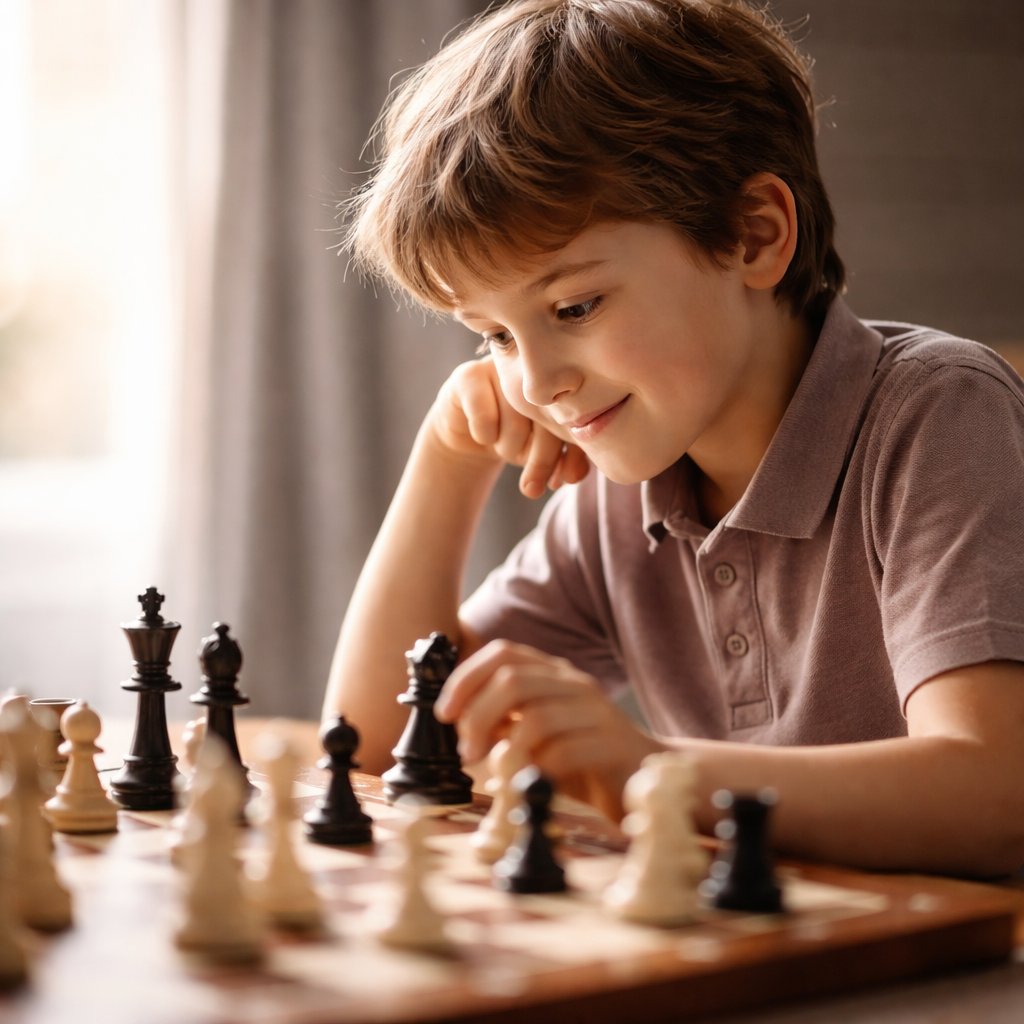
By the third week, something shifted.
My child no longer looked at me for approval after every move. The hesitation was gone. The constant “Is this right?” disappeared.
There was ownership now.
Moves were being planned two, sometimes three steps ahead. Losses still happened — but they weren’t personal anymore. They were puzzles to solve.
One evening, after winning a game against me, my child smiled and said,
“I knew you were going to do that.”
That quiet confidence hit me harder than any checkmate ever could.
Because it wasn’t just about chess.
It was about believing in their own thinking.
Week Four: The Moment That Shocked Me
By the fourth week, chess was no longer something we were “trying.” It had quietly woven itself into our evenings, settling into that small space between dinner and bedtime where conversations usually drift and attention fades. But this time was different. The board wasn’t just a game anymore — it had become a mirror.
What struck me most wasn’t a brilliant move or a sudden winning streak. It was the way my child began approaching challenges outside the game. There was a noticeable pause before reacting. A breath. A moment of silent calculation. The impulsiveness that once showed up in small frustrations started softening into patience.
One evening, while working through a particularly difficult homework assignment, I watched from across the room. In the past, this would have ended in defeat — eraser marks pressed too hard into paper, eyes watering in frustration, a quiet “I can’t do this.”
But instead, my child leaned back, stared at the ceiling for a second, and whispered, almost instinctively,
“Okay… let me think.”
And it wasn’t just a phrase.
It was a process.
It was strategy.
It was resilience unfolding in real time.
That’s when it truly hit me. Chess hadn’t just been teaching moves and counter-moves. It had been teaching foresight. Emotional control. The discipline of slowing down before reacting. The courage to sit with difficulty instead of escaping it.
And that realization stopped me.
Because what started as a simple 30-day experiment had quietly reshaped the way my child faced the world.
That was the part that shocked me.
What 30 Days of Chess Taught Me as a Parent
When I started this 30-day experiment, I thought I was introducing a game.
What I didn’t realize was that I was introducing a habit of thinking.
Chess didn’t magically transform my child into a prodigy. It didn’t remove every frustration or solve every problem overnight. But it did something far more important — it built a mental pause between challenge and reaction.
And as a parent, that pause is priceless.
It reminded me that growth doesn’t always look dramatic. Sometimes it looks quiet. Subtle. Almost invisible at first.
A deeper breath.
A longer focus.
A calmer response.
Thirty days ago, I thought I was teaching my child how to play chess.
Now I realize… we were both learning something much bigger.
If you’ve ever wondered whether small daily habits can truly shape a child’s mindset — maybe it’s worth trying for 30 days.